Installing a pergola on a condominium terrace can be an excellent way to add value and enhance the look of your outdoor space. However, carrying out this project requires following certain procedures and taking current regulations into account. In this article, we guide you step by step to successfully install a pergola on your condominium terrace.
Checking the regulations and required authorizations
Before starting the installation of a pergola, you should first check whether this is possible under the regulations that govern your condominium.

Condominium bylaws
First, consult your building’s condominium bylaws if you share part of it with other owners. This is a requirement under the “Law No. 65-557 of 10 July 1965 establishing the status of co-ownership of built properties“. This document sets out the rights and obligations of co-owners regarding work on private and common areas. If there is no mention of installing outdoor structures such as pergolas, you will then need to request authorization from all co-owners at the next general meeting. If you are tenants, speak to your landlord first.
Local Urban Plan (PLU)
Next, check with the town hall (or on the Géoportail – https://www.geoportail-urbanisme.gouv.fr/) to find out the rules of the Local Urban Plan (PLU) regarding pergola installations. Depending on the residential zone and the aesthetics of your project, you may need to apply for a building permit.
Requesting authorization from the condominium association
Once you have checked the applicable regulations, you will need to obtain the agreement of the other co-owners. To do so, follow these steps:
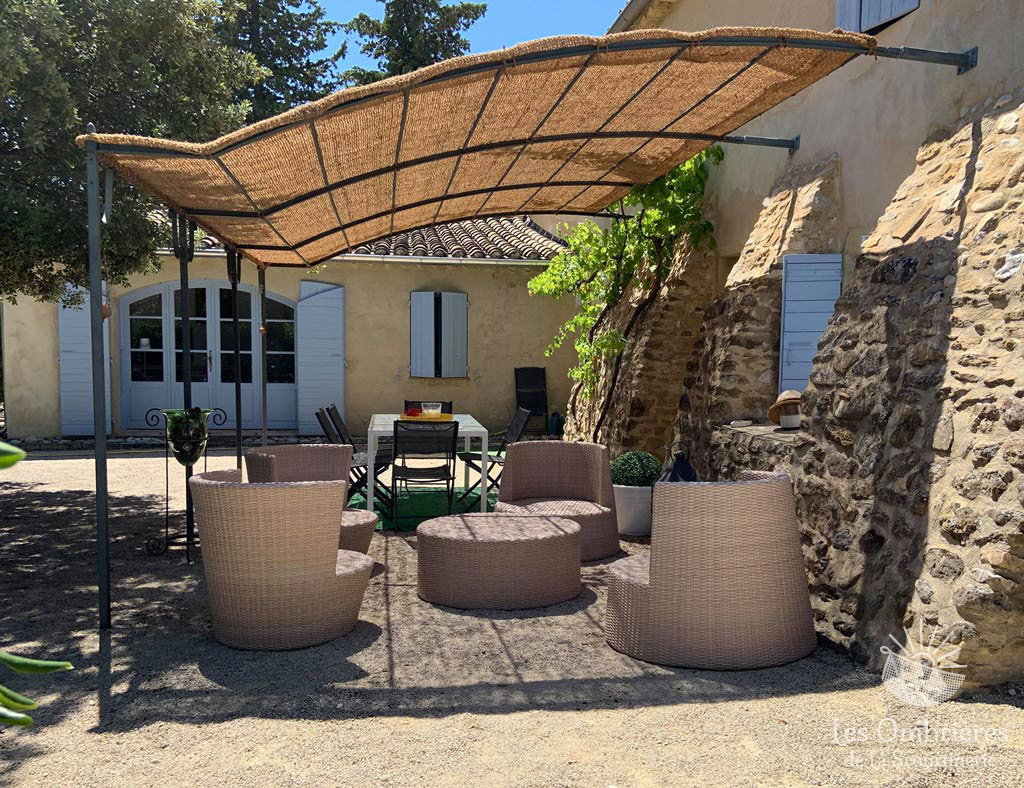
- Write a written request: specify in this request the characteristics of the project (materials, dimensions, height, aesthetics), the reasons why you wish to install a pergola, as well as any potential positive benefits for the condominium (property value increase, improved living environment, etc.). The more solid your file is (plan, photo, mock-up…), the better your chances of getting a positive response. Also specify the roof covering you will put on your pergola. By choosing a coconut shade sail as a pergola cover, you keep a natural look and you do not create noise pollution (as is the case with PVC during heavy rain), nor any rainwater runoff.
- Submit your request to the property manager: send your request to the condominium property manager by registered letter with acknowledgment of receipt. They will then add your project to the agenda of the next general meeting of co-owners.
- Present your project at the general meeting: during the general meeting, present your project to the other co-owners and answer their questions or concerns. The decision to approve or not approve the installation of your pergola will be made by a majority vote.
Hire a professional to install the pergola
Once your project has been approved by the condominium association or your landlord, you will need to hire a professional to carry out the installation of your pergola. Here are a few tips for choosing the right provider:
- Shop around: request several quotes from different professionals in order to compare prices and the services offered.
- Check references: don’t hesitate to ask for photos of previous projects as well as the contact details of former clients to gather their feedback.
- Choose a local manufacturer: choose a manufacturer and installer located near you, which will make things easier should you need anything.
- Make sure the professional is insured: it is essential that the company you work with has professional liability insurance in order to protect your investment.
Site preparation
Before starting the installation work for your pergola, the site must be prepared. In particular, you should:
- Inform the neighbours: to avoid any unpleasant surprises or later complaints, inform your neighbours of the start and end dates of the work, as well as any potential noise nuisance due to the site.
- Apply for the necessary authorisations: if a building permit is required (check with your local council), be sure to complete the administrative steps in good time to obtain the council’s authorisation.
- Check access to the site: make sure the installer has easy and safe access to your terrace to bring in the necessary equipment (cherry picker, scaffolding…).
Worksite follow-up and pergola maintenance
During the work, make sure to monitor progress and check that your pergola installation complies with the rules set by your condominium association. Once the work is finished, carefully inspect the structure, especially the fixings, seals and finishes. Don’t hesitate to take photos during the work; they will serve as evidence in case of poor workmanship.
Once installed, to preserve the look and durability of your pergola, it’s important to maintain it regularly. Clean the panels, slats or fabric regularly with soapy water to remove dirt, moss and other debris that can build up over time and cause premature deterioration of the structure. If you have a coconut shade sail, remember to winterise your shade canopy (the pergola roof); you’ll extend its lifespan. Also remember to check the condition of the fixings and mechanical parts frequently, and protect them against corrosion if necessary.
By following these tips and complying with the administrative steps related to your condominium association, you’ll be able to fully enjoy your new pergola on your terrace and benefit from a pleasant, welcoming outdoor space!