

PRODUCT INFORMATION
PRODUCT INFORMATION
Usage
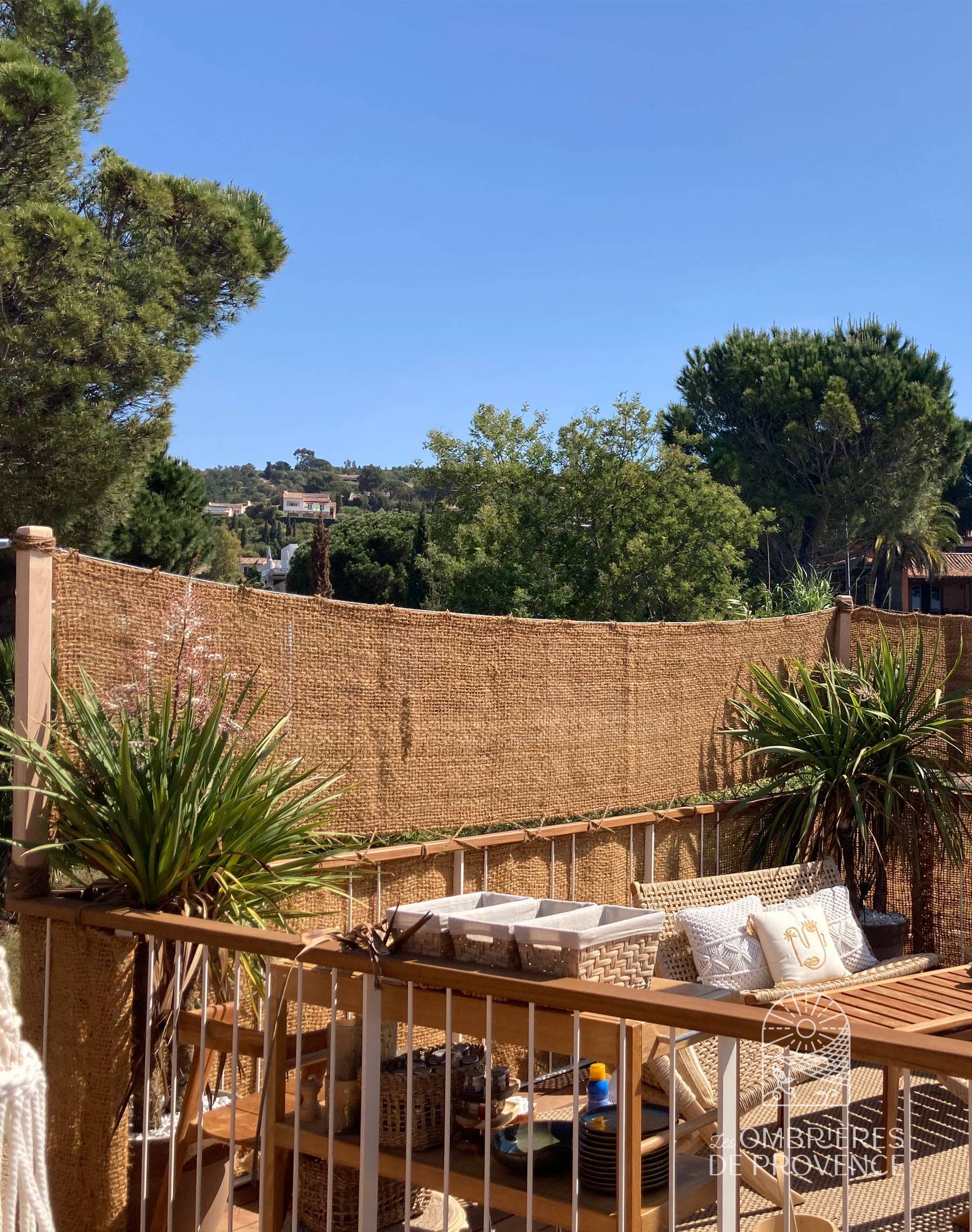
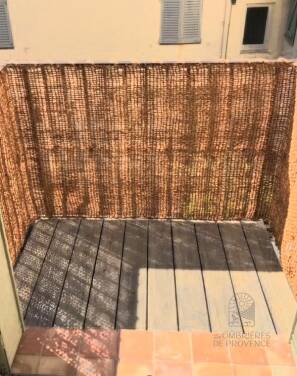
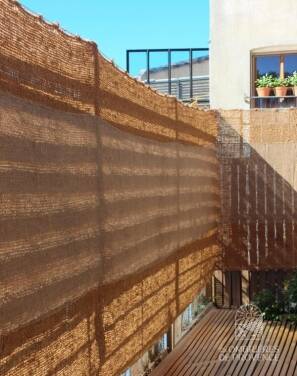
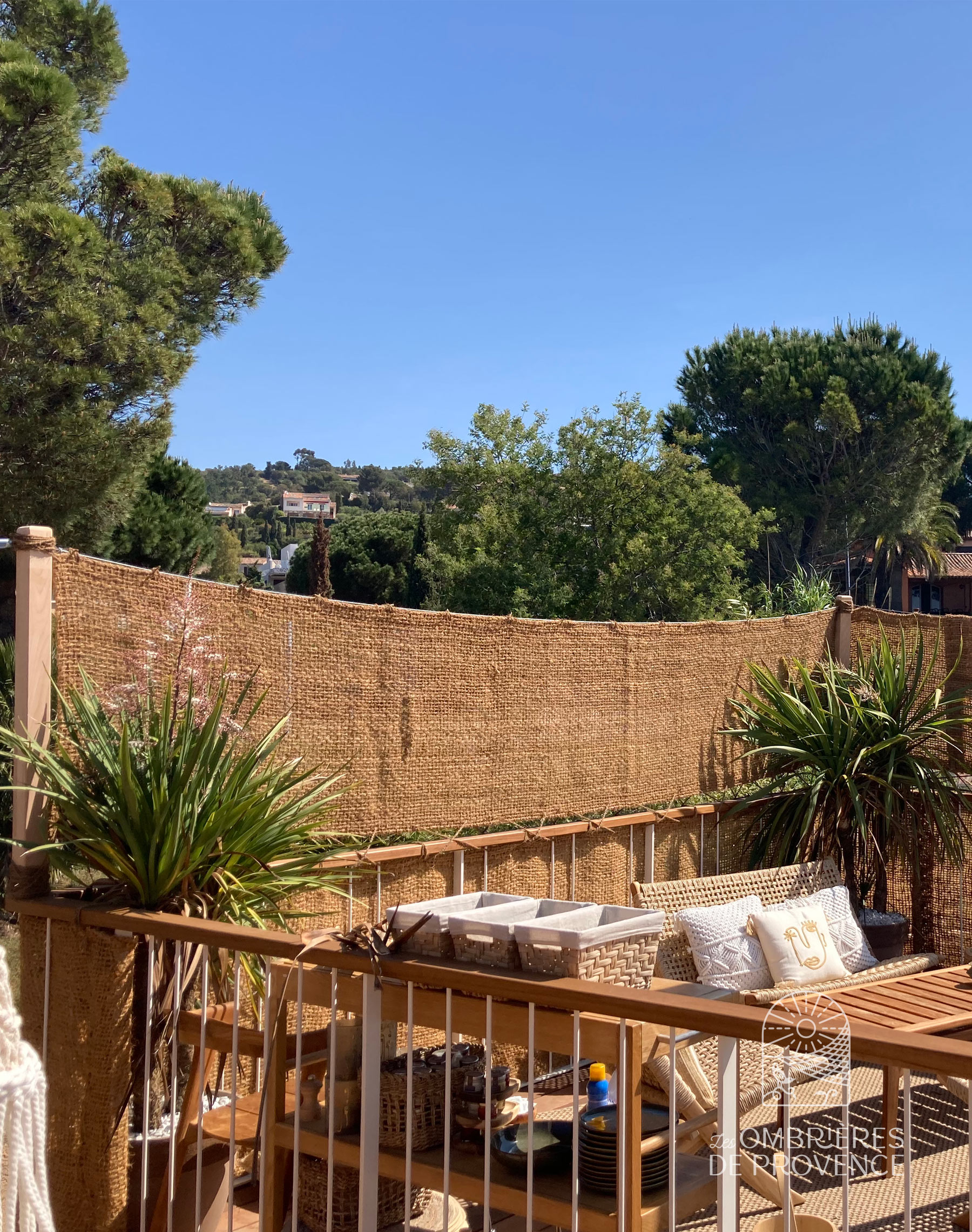
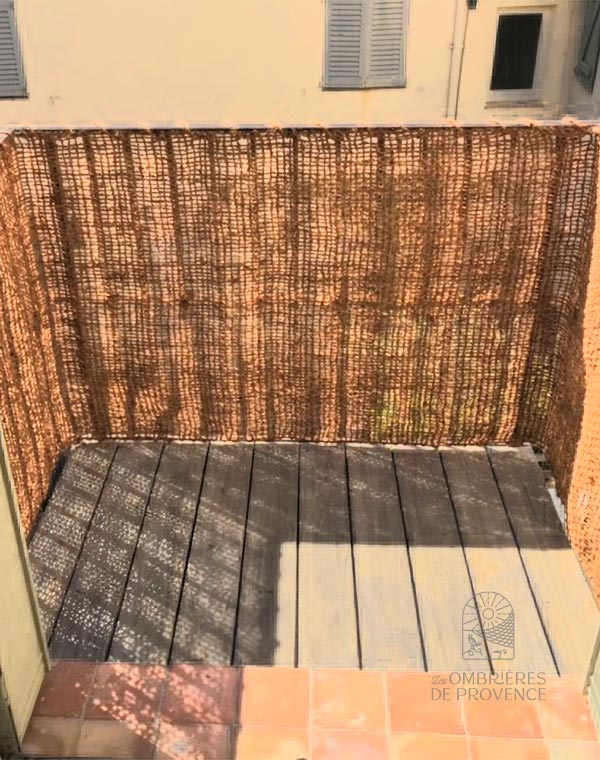
Rectangular openwork panel, designed for use as a blackout screen on a balcony or terrace. Versatile, it can be installed horizontally on a railing, wire fence or balustrade.
Bonus: The Coco Robusta balcony privacy screen also provides excellent sun protection and helps reduce wind.
Installation & Fixing system
The panel comes with its fixing rope (Ø 0.5 mm), allowing you to make the necessary attachments to the support. For easier installation, we recommend using the needle provided, which will make tying the knots much simpler. See installation guide
Maintenance
No special maintenance is required.
Weather info
– When in contact with water, the coconut fiber weave relaxes, the panel becomes heavier, doubling in weight, then returns to its original tension once dry. This is how the fiber reacts to moisture.
– During prolonged dry spells, it is advisable to mist or wet the coconut panel from time to time to extend its lifespan. Coconut fiber prefers a slightly humid climate.
– Finally, coconut fiber naturally turns grey over time, taking on a silvery hue that adds a rustic charm. This change in appearance does not affect its effectiveness.
Good to know
We guarantee all our products for 2 years, except for the Coco Robusta range which is guaranteed for 3 years (See T&Cs).
The average lifespan of our products is 3 to 4 years, except for the Coco Robusta range whose average lifespan is 5 years.
TECHNICAL SPECIFICATIONS
TECHNICAL SPECIFICATIONS
Main material: Coconut fibre, a raw material obtained from the recycling of unused coconut shells.
Origin: Produced in India by our long-standing partner.
Product treatment: None.
Dry weight: 1600 g/m².
Wet weight: 3200 g/m².
Thickness: 1 cm.
Edge finish: ⌀ 17 mm rope
Flexibility: Flexible weave that can be folded or rolled up
Moisture resistance: Rot-proof, i.e. the material does not rot
Permeability: Not affected by rain, does not retain water
Wind resistance: Very low, thanks to its airy weave
Heat under shade: Increased feeling of coolness thanks to efficient air circulation
SHIPPING & RETURNS
SHIPPING & RETURNS
Good to know
Depending on the size and number of models ordered, your order will be shipped in a box or on a pallet. When your order is delivered on a pallet, our shipping provider will contact you in advance.
Shipping
Our products are bulky. We only offer delivery to your home or the address of your choice.
Delivery time: 5-8 business days
Returns
If the product does not meet your expectations, you have 14 calendar days to request a return from our customer service department. We value your satisfaction and will facilitate the return process at your convenience. (Return policy)
⭐ CUSTOMER REVIEWS
⭐ CUSTOMER REVIEWS



You may also like…
-
Coconut roller shade
Price range: 295 € through 315 € -
Sliding coconut curtains with eyelets
Price range: 190 € through 285 € -
Coco curtains with open hem
Price range: 130 € through 195 € -
Sliding coconut curtains with loops
Price range: 180 € through 270 €

Main features:
- Blackout screen
- Low wind resistance
- Intense shade
- With rope included
- Easy installation
- 2 sizes available
- Custom size possible
Balcony privacy screen: regain your privacy without weighing down the railing
Balcony privacy: a different challenge than a garden fence
On upper floors, sightlines don’t just come from straight ahead but from above, below, and angles: a neighbor’s window looking down at your table, a shared walkway, the street and its bus stops, or the building opposite just fifteen meters away. There is also a constraint gardens don’t face: space is at a premium, and anything that blocks light comes at an immediate cost to comfort. The Coco Robusta balcony privacy screen addresses this specific scenario—a vertical screen attached to the railing that blocks the line of sight at seat and coffee-table height (where balcony life actually happens) without rising up like a curtain above the balustrade. For garden fencing, a terrace return, or a long stretch of wire mesh, you should look at the ultra-dense coconut privacy and wind screen: same fibers, but much larger formats.
Two sizes tailored to standard railing heights
The product comes in 2x2m and 2x3m sizes, matching common railing dimensions: a continuous balcony can be covered by placing two panels side-by-side, while a small balcony or loggia can be fitted with a single piece. The screen is installed lengthwise along the railing; any excess height can be folded inward or secured with ties at the bottom. A practical tip: it is better to choose a slightly larger size and take up the slack by folding the edge over, rather than cutting the border, because the 17mm perimeter rope is what prevents the weave from unraveling over time.
Securing to a railing: bars, glass, or sheet metal
Installation involves tying the panel in place using the two 0.5 cm coir rope coils supplied with it. On a metal bar railing, the rope is threaded directly between the bars: space the attachment points closely at the top and further apart at the bottom. For glass railings or solid sheet metal panels, an intermediate anchor point is required—such as a handrail, bottom rail, or intermediate tube—since the material cannot hold itself up through tension alone. You must also account for the cantilever effect: balconies act as projecting structures, and the screen becomes significantly heavier when wet (returning to its original tension as it dries). Therefore, distribute the attachments rather than concentrating the load on just three knots, and avoid leaving a loose section on the street side that could flap in the wind.
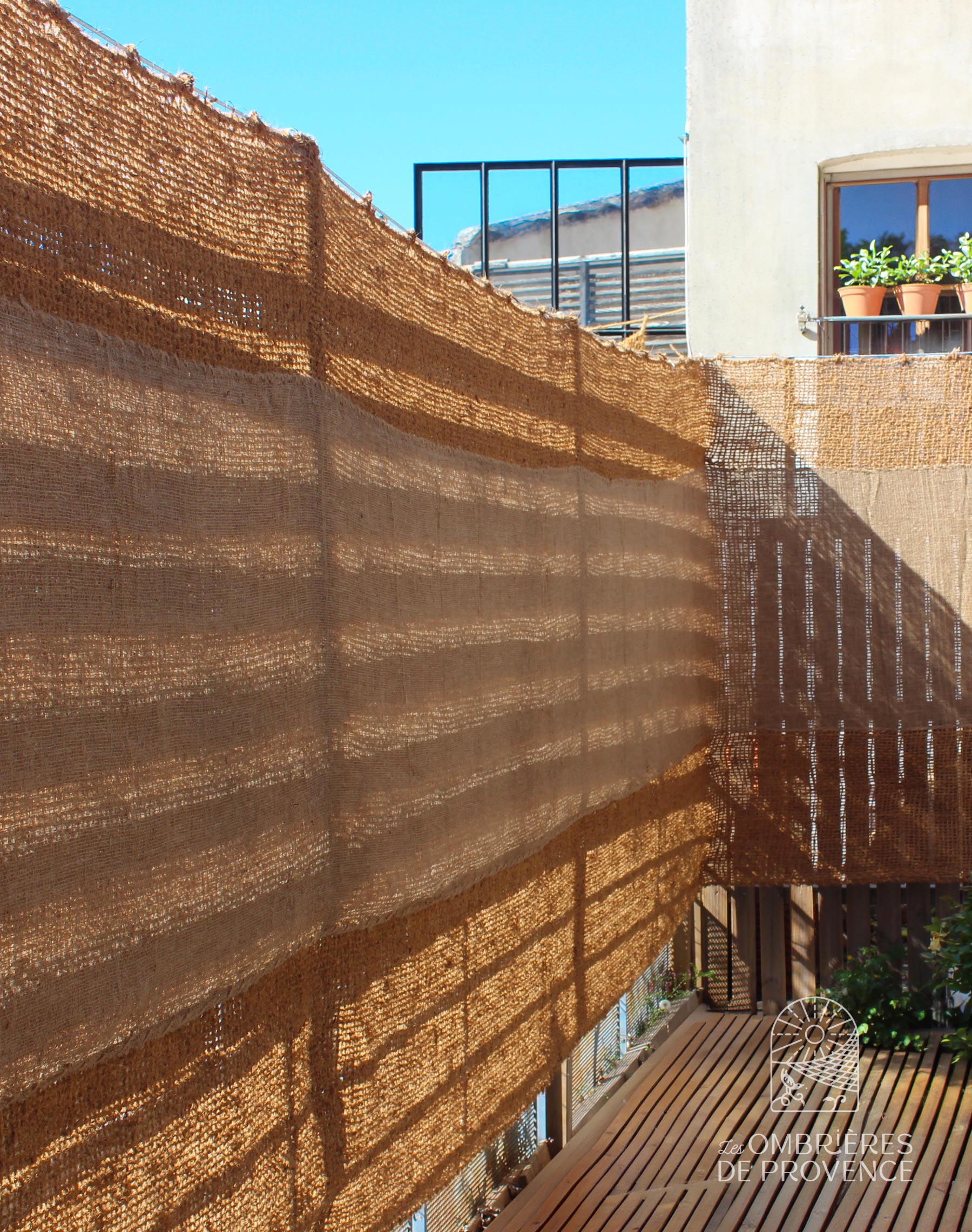
Wind at height, light levels, and winter removal
Apartment balconies are exposed to wind gusts not found in ground-level gardens: wind acceleration between buildings, corner eddies, and updrafts along the façade. The weave remains open, allowing air to pass through rather than pushing against the material—this is precisely what makes it possible to install a high-opacity screen at height without turning the railing into a sail. Regarding light, expect a significantly more shaded balcony: for north-facing spots or already dark loggias, it is better to cover only half the length or opt for the “Classique” range dense coir screen, which offers a brighter look. Finally, the material can be folded and rolled without retaining crease marks: it can be taken down at the end of the season, stored in a dry place, and reinstalled in the spring—a practical flexibility for situations where condo regulations require periodic façade maintenance. All coconut-fiber screens, curtains, and blinds are grouped under the curtains and screens category.