
PRODUCT INFORMATION
PRODUCT INFORMATION
Usage
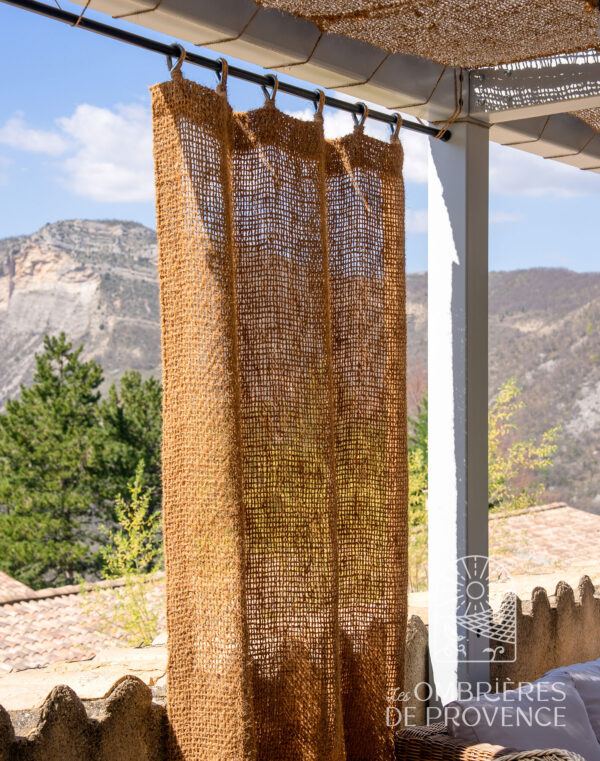
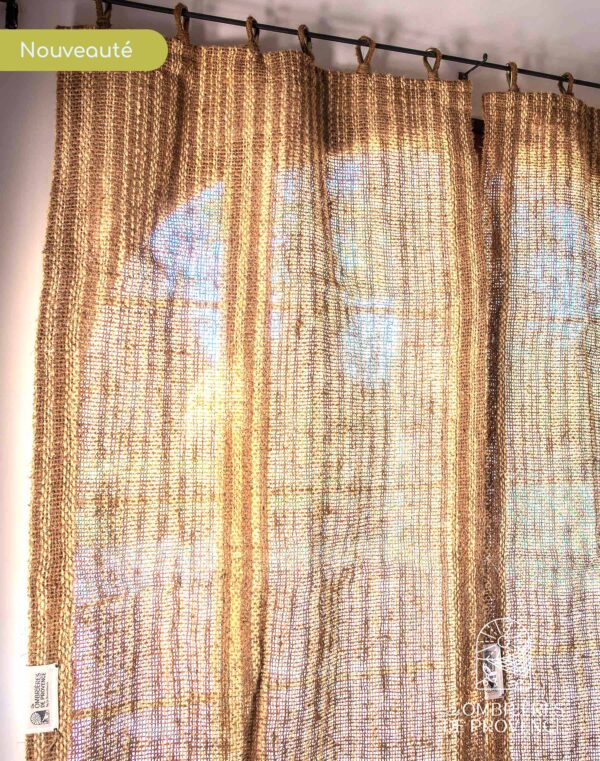
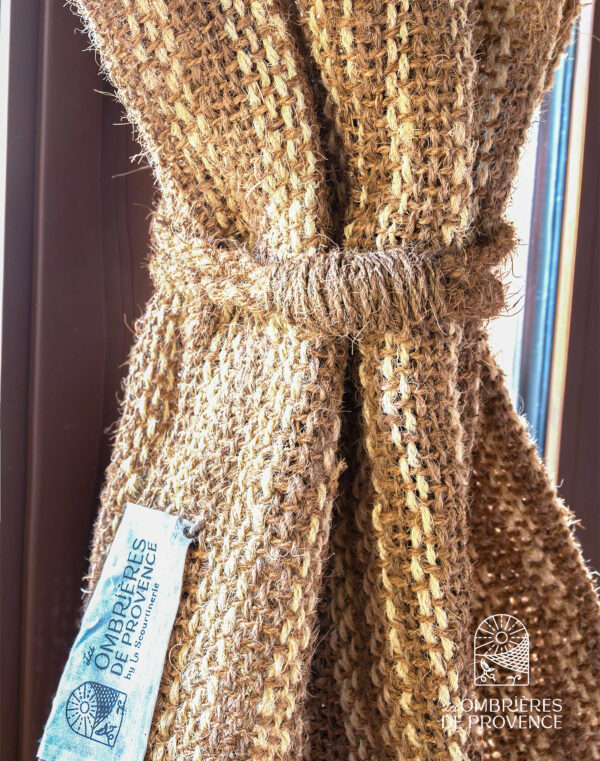
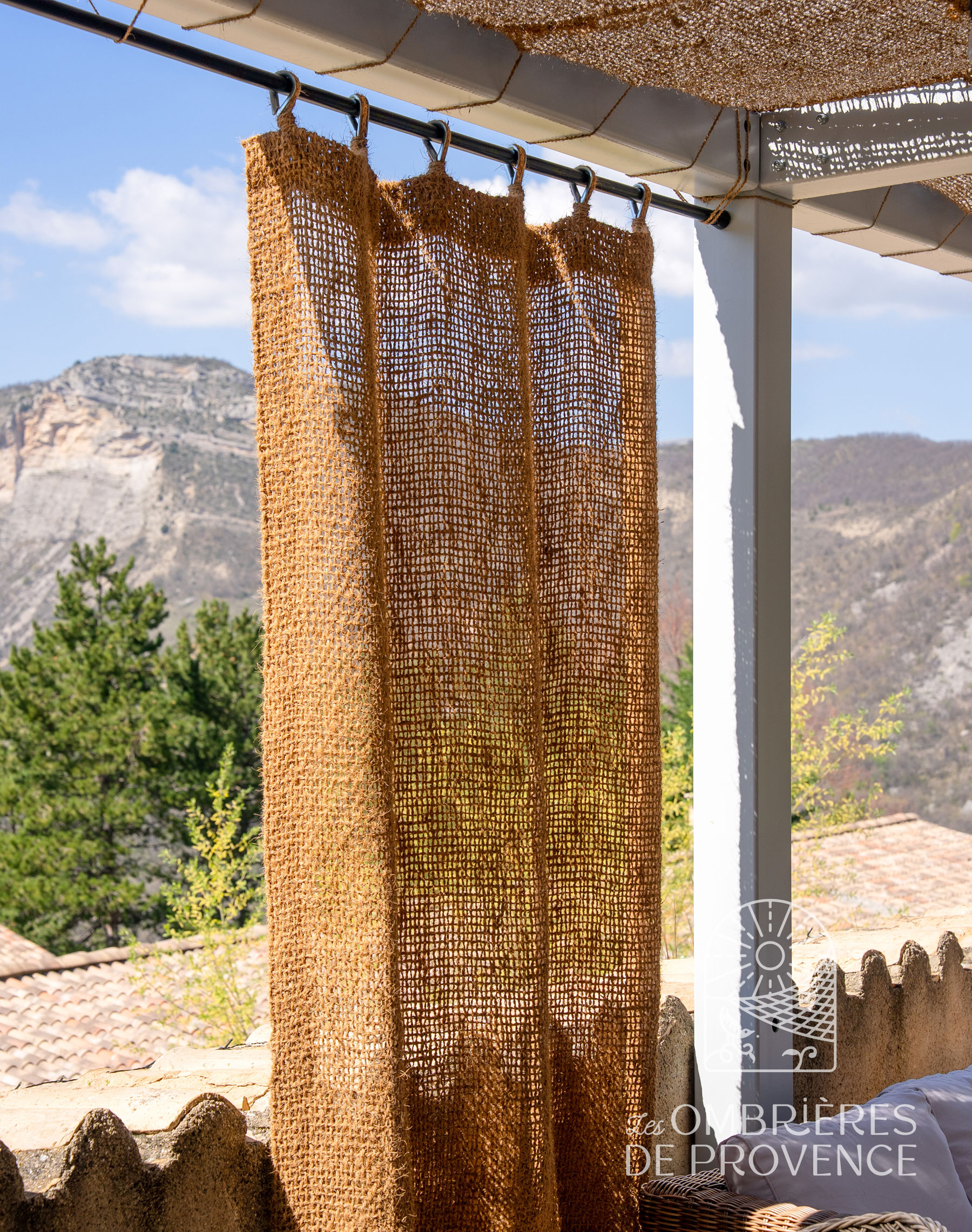
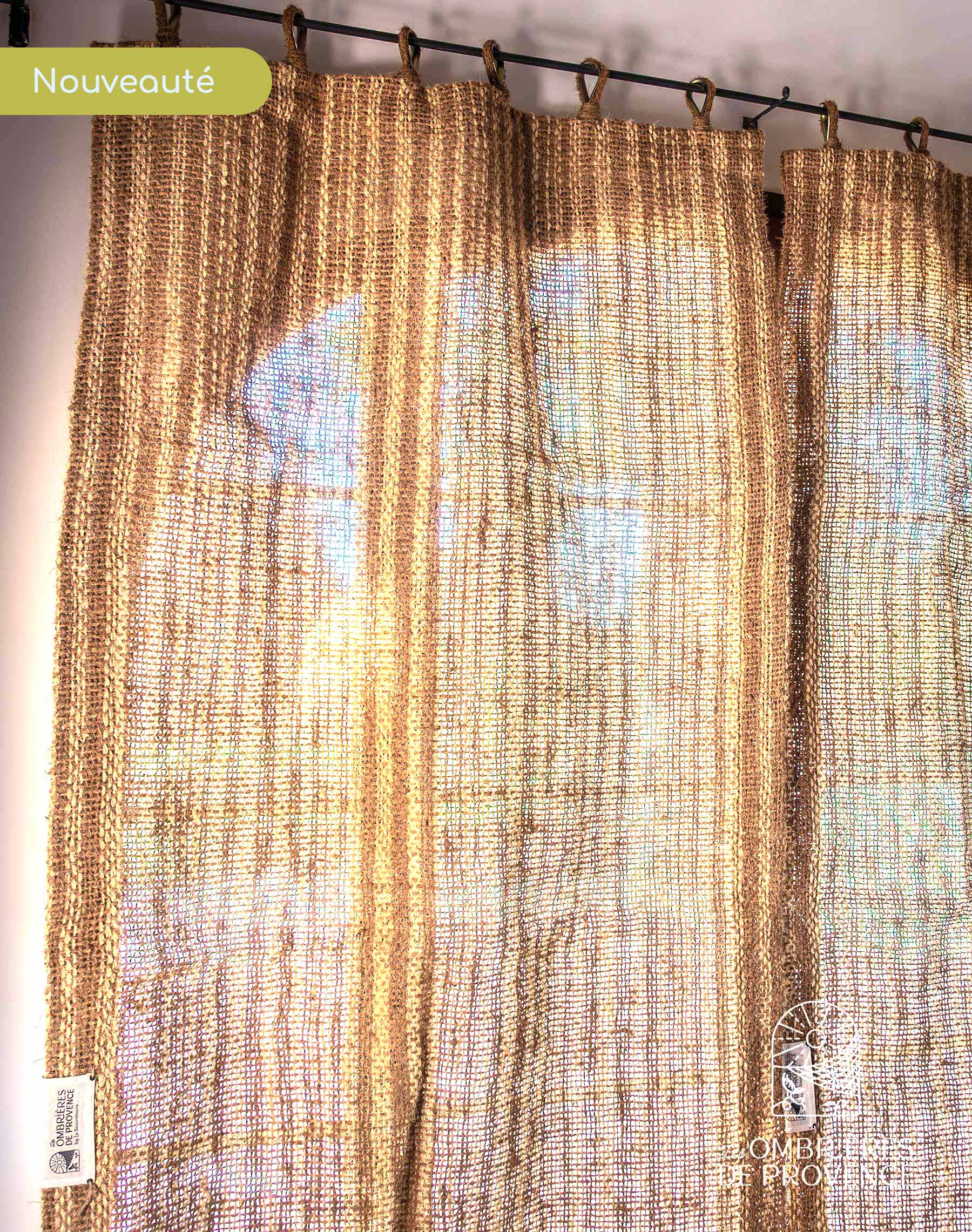
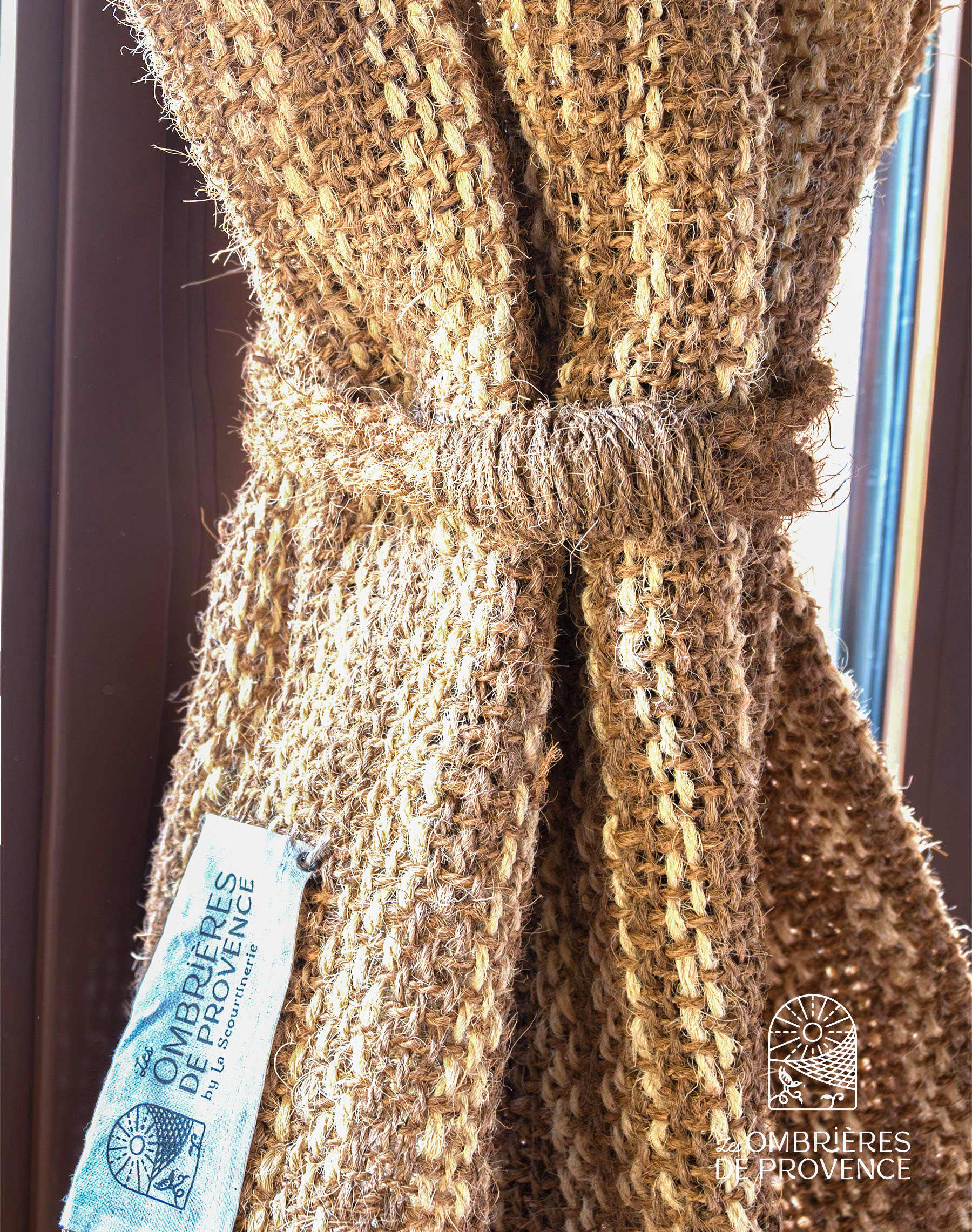
This premium coconut-fiber curtain features eyelets set on a cotton braid with a high-end finish, allowing it to slide easily.
Installation system
Vertical installation using a rod or similar (rod, wooden cleat, metal bars, steel cable, etc.).
To keep your curtains fixed, you can add a ballast bar to the bottom hem.
For further details, please refer to the product technical specifications.
Product delivered with installation instructions
Maintenance
No special maintenance is required. However, we strongly recommend winterizing your curtain in a dry, well-ventilated, rodent-proof place.
Weather info
On contact with water, the weave of the coir fibre relaxes, the shade sail becomes heavier, doubling in weight, and then regains its initial tension once dry. In regions prone to snowfall, it is strongly recommended to winterize the coco sail to prevent any potential damage. In periods of prolonged drought, it is advisable to mist or wet the shade from time to time to prolong its life. Coir prefers a slightly tropical climate. Finally, coir naturally greys over time, taking on a silvery hue that adds a rustic charm. This change in appearance does not affect its efficiency.
Good to know
We give a 2-year guarantee on all our products (see Terms and Conditions).
The average lifespan of our products is 3 to 4 seasons.
TECHNICAL SPECIFICATIONS
TECHNICAL SPECIFICATIONS
Main material : Coconut fiber, a raw material derived from the recovery of unused coconut husks.
Origin : Produced in India by our long-standing partner
Ecology : Bio-sourced material, 100% biodegradable – except buckles
Product treatment : None, 100% natural
Dry grammage : 900 g/m².
Wet basis weight : 1.8 kg /m²
Thickness : 1 cm
Flexibility : Flexible weave that can be folded or rolled up
Moisture resistance : Rot-proof, i.e. the material will not rot
Permeability : Rain-resistant
Wind resistance : Very low, thanks to its airy weave
Type of construction : Galvanized steel buckles
Inner loop diameter : 30 mm
Type of opening : lateral
Fastening : on rod or cable or similar
Washing : possible with mild soap”
SHIPPING & RETURNS
SHIPPING & RETURNS
Good to know
Depending on the size and number of models ordered, your order will be shipped in a box or on a pallet. When your order is delivered on a pallet, our shipping provider will contact you in advance.
Shipping
Our products are bulky. We only offer delivery to your home or the address of your choice.
Delivery time: 5-8 business days
Returns
If the product does not meet your expectations, you have 14 calendar days to request a return from our customer service department. We value your satisfaction and will facilitate the return process at your convenience. (Return policy)
⭐ CUSTOMER REVIEWS
⭐ CUSTOMER REVIEWS




























You may also like…
-
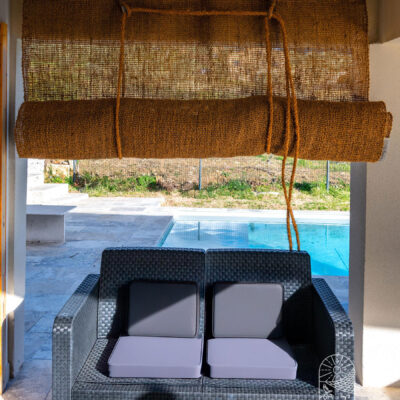
Coconut roller shade
Price range: 295 € through 315 € -
Sale!
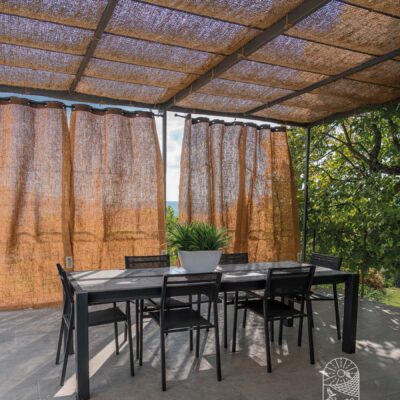
Sliding coconut curtains with eyelets
Price range: 120 € through 285 € -
Sale!

Coco curtains with open hem
Price range: 80 € through 195 € -

Privacy screen & windbreak – Coco Robusta
Price range: 145 € through 840 €

Main features:
- Natural shadow
- Curls and heart pods
- Soft rendering
- Easy installation
- Quick and easy to open
- 2 sizes
- Made-to-measure possible
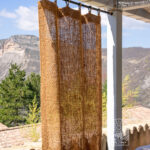
Open hem coconut outdoor curtain: a taut panel, not a sliding curtain
The right choice when the curtain stays in place
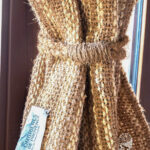
Not all outdoor curtains are meant to be opened and closed ten times a day. The open hem model is designed to remain taut: it is installed on one side of the pergola exposed to the low, late afternoon sun, at the bottom of an arbor, between two posts to close a corner of the terrace, or as a light partition between a dining area and a passage. It is not designed to slide on its rod – this is what gives it this regular drape, without folds or excess thickness. The opening is done laterally, by raising the panel on the side and embracing it with a rope or tie. If, on the contrary, you are looking for a curtain that can be handled daily, turn to the sliding coconut curtains with loops or to the sliding curtains with eyelets, the manufacture of which is intended for repeated sliding.
Two 60 mm hems: what changes it makes when installing
The confection has a hem on each of the two widths, top and bottom, with an internal diameter of 60 mm. Concretely, the curtain is slipped like a sock on its support: rod, metal rod, wooden cleat, tube or steel cable – anything that passes within 60 mm is suitable, keeping a little play so that the fiber does not strain. The order of operations matters: first thread the bar into the hem, then attach the ends to the supports, never the other way around. On a width of 2 m, it is better to avoid rods that are too thin which would have a visible sag in the center. Often overlooked point: the bottom hem is not decorative. Slipping a second bar into it transforms the panel into a taut screen which no longer flaps at the slightest breath – it’s the gesture which makes the difference between a curtain which is enjoying its season and one which slams against the post.
900 g/m²: filtering light rather than cutting it
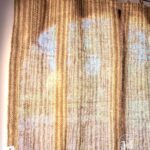
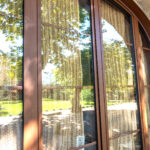
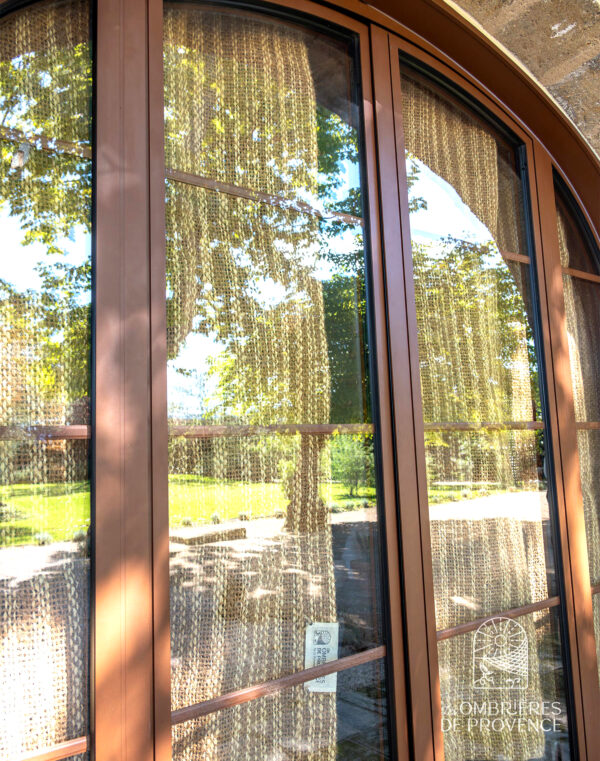
With 900 grams per square meter dry for one centimeter thick, this weave is deliberately set back from blackout screens. It intercepts direct rays, breaks the glare and lowers the temperature felt behind it, while allowing subdued light to filter through: you don’t find yourself in the dark under the pergola at the end of the day. The mesh remains ventilated, the air passes through it, and the wind resistance remains very low for a panel of this height – a decisive point on a pergola where the curtain works on the full facade. If your priority is to eliminate a view rather than to soften the sun, it is towards the blackout screens of the category that you should look; the hemmed curtain plays on the atmosphere and thermal comfort.
Formats, durability and wintering
Three dimensions cover the most common configurations: 1.5 x 2.2 m, 1.5 x 2.8 m and 2 x 2.5 m, knowing that the useful height is slightly reduced once the bars are engaged in the hems – to be included when measuring your height under the beam. Also anticipate the behavior of the fiber in humidity: the weave relaxes in the rain, the mass doubles, then the tension returns when drying. A rod and supports sized for dry conditions will therefore be used more with each downpour. The rest of the maintenance requires just a few things: an occasional wash with mild soap is enough, the fiber is rot-proof and slowly turns towards a silvery gray without losing any of its effectiveness. At the end of the season, the panel is removed from its bars, folded or rolled up, and stored in a dry, well-ventilated place, protected from rodents – a few more seasons at stake. The other models in the range are grouped together in the coconut curtains category.